BY: Elissa Mahendra
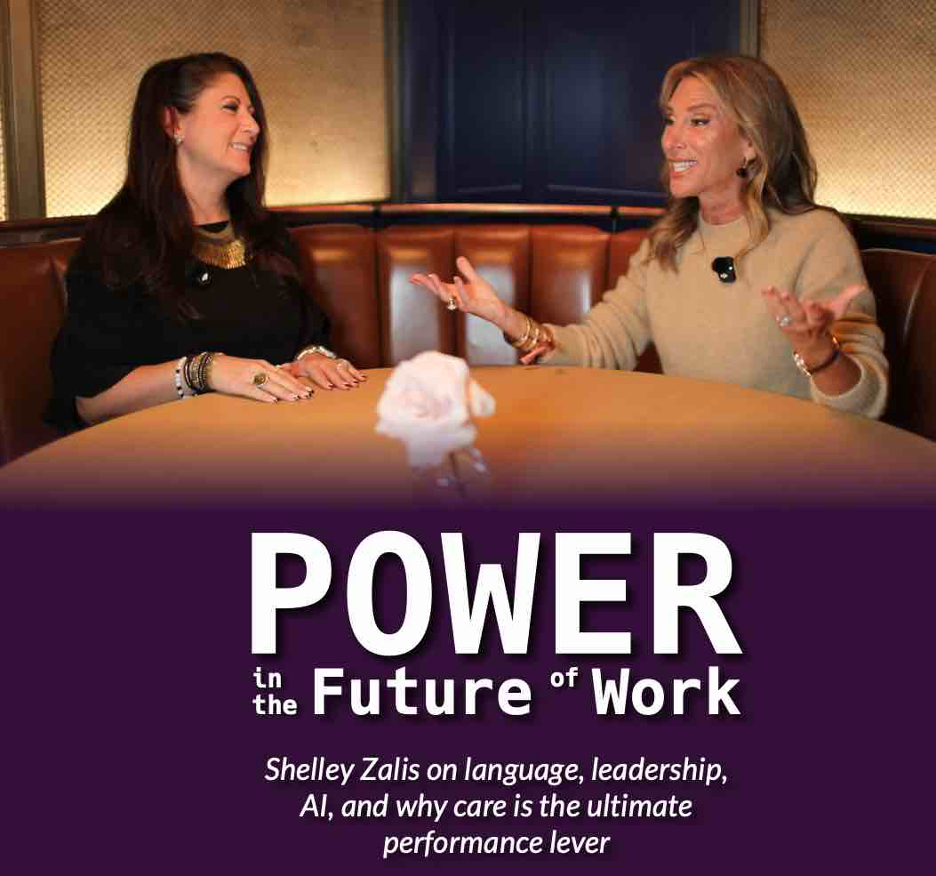
Shelley Zalis on language, leadership, AI, and why care is the ultimate performance lever.
When the future of work is being discussed at scale, the Consumer Electronics Show (CES) is where those conversations surface, and Shelley Zalis, Founder and CEO of The Female Quotient, is at the center. The energy at CES is electric. Walking the floor can feel overwhelming. The scale. The noise. The pace. Innovation everywhere.
Power Begins with Language
At Career Mastered, we often share three words. Iconic. Presence. Power. Presence that is rooted, visible, and owned. Power that is embodied, not borrowed or bestowed. Shelley’s perspective aligns squarely with that philosophy.
“Language matters,” Zalis says. She is direct about how language reinforces outdated power dynamics. Terms like
‘male allies’ or ‘female empowerment’ suggest that power is held by some and granted to others.
“We do not need male allies,” she says. “We need leadership allies. People who use their power, regardless of gender, to lift others up.”
If you look up the word empower,” she adds, “it suggests someone else is giving you permission. Women do not need permission. The power is already within us.” Her message is simple. Stop waiting. Stop asking. Start claiming.
“We are not getting empowered,” she says. “We are empowered.”
That shift changes how women see themselves, show up, and lead.
Becoming Yourself Is the Real Power Move
When asked what advice she would give her younger self, just starting The Female Quotient, Zalis does not hesitate.
“Be yourself,” she says, quoting Oscar Wilde. “Everyone else is taken.”
She speaks openly about embracing her identity as Chief Troublemaker, a title that gives her permission to challenge rules that no longer make sense and create new ones that do.
She also references a favorite Sarah Jessica Parker quote. Trying to be a man is a waste of a woman.
“I embrace my feminine leadership,” Zalis says. “Collaborative. Empathetic. Compassionate. And unapologetic.”
Her message to women is simple, but not easy: stop waiting. “Take the permission,” she says. “Permission granted — by you.”
Leadership Power in a World Shaped by AI
At a conference centered on innovation, the topic of AI naturally surfaced. Zalis is unequivocal.
“AI will not take your job,” she says. “Someone who knows how to use AI will.”
Rather than resisting change, she encourages leaders to embrace curiosity as a source of power. In her view, AI is not a threat to human creativity. It is an amplifier. A way to offload manual work and create space for vision, empathy, and better decision-making.
Fluency expands both personal and leadership power. Leaders who know how to work alongside AI gain speed, insight, and influence. Those who avoid it risk falling behind, not because they lack talent, but because they lack access to the tools shaping how work gets done. Mastery, as Career Mastered believes, is not about doing everything yourself. It is about knowing where to focus your energy and how to extend your impact.
The Care Quotient as a Leadership Multiplier
As organizations accelerate AI adoption and navigate ongoing layoffs, Shelley Zalis is clear about what must not be lost in the process. Care.
Caregiving. Mental load. Invisible labor.
“If you want your best talent,” she says, “you have to take care of them.”
Zalis points to two critical moments where women are most likely to stall or step away entirely. Maternity leave and the first promotion, when you ask for the raise. The inflection points where ambition collides with sustainability, and too often, women are forced to choose between the two.
She reframes caregiving not as a constraint on leadership, but as a source of it.
“If someone is empathetic, collaborative, adaptable, and capable of managing complexity,” she asks, “why would we not want that person leading?”
In a disrupted talent market, care becomes a leadership multiplier. A critical factor in retaining trust, sustaining culture, and keeping top talent engaged through change. Closing the care gap is not an accommodation. It’s a powerful performance lever.
This Is the Moment
Women’s History isn’t just about honoring the past. It’s about who gets to shape the future.
At CES, amid rapid innovation and influence, Shelley Zalis made one thing clear: Progress belongs to leaders who claim their power, embrace the future of work, and build cultures where care is a strategic driver of performance. That future is not waiting 123 years*. It is being built now.
Elissa Mahendra is a transformational HR and Talent executive, advisor, and thought leader with over 20 years of experience helping organizations and leaders grow through moments of scale, reinvention, and change.